Blog
Central Heating Not Working? A Homeowner's Checklist Before You Call an Engineer
Stay calm, work through this simple checklist and know what to do before calling an engineer about a heating breakdown.

If your central heating has suddenly stopped working, it can be stressful, especially on a cold day. A clear checklist helps you stay calm, rule out simple issues and give your heating engineer the right information to fix the problem faster.
Safety first before you touch anything
Before checking controls or boiler settings, take a moment to think about safety. Some situations should not be handled as a DIY job.
If you smell gas, hear a hissing sound near gas pipework, or suspect a carbon monoxide leak, leave the property and call the national gas emergency number immediately. Follow the guidance you are given and do not try to restart or reset the boiler.
Never remove the boiler casing or attempt to access internal components. This is legally gas engineer only work. Also avoid repeatedly pressing the reset button if the boiler keeps locking out, as this can make a fault worse or mask a serious issue.
Is it the whole home or just one area?
Start by working out how widespread the problem is. This helps narrow down the likely cause and gives your engineer useful information from the outset.
All radiators cold: usually a boiler, controls, power or system-wide issue.
Some radiators hot, some cold: may point to air in the system, stuck valves, balancing or sludge.
One single radiator cold: often a local valve, trapped air, or blockage near that radiator.
Noises from pipes or radiators: can suggest air, circulation problems or limescale buildup.
Also note if the problem is sudden or has been getting worse over time. A gradual decline can suggest pressure loss or sludge, while a sudden stop can indicate a component or control failure.
Check power to the boiler and controls
Boilers and programmers rely on a constant electrical supply. A power issue is one of the quickest things to rule out.
Look at the boiler display. If it is completely blank, check nearby fused spurs or switches and make sure they are turned on. Then confirm that other electrical items on the same circuit are working, and that your consumer unit has not tripped.
Next, check your room thermostat and programmer or smart heating app. Confirm the time and date are correct and that the heating schedule is active, not set to “off” or “holiday”. Try setting the thermostat higher than usual to see if the boiler fires.
Thermostat and programmer checks
Many callouts turn out to be a controls issue rather than a boiler fault. Take a minute to double check the basics before you assume the worst.
Ensure the room thermostat is on, with fresh batteries if it is wireless. The temperature should be set above the current room temperature for the heating to request heat from the boiler.
On the programmer, make sure the central heating channel is set to “on” or “timed” and that you are actually within an “on” period. If in doubt, set the heating to “constant” for a short time while you test whether the radiators begin to warm.
Boiler pressure, visible leaks and hot water check
For sealed systems, low pressure is a very common cause of no heating. Look at the pressure gauge on the front or underside of the boiler. It is usually marked in bar with a green zone highlighting the normal range.
Most domestic boilers are happy around 1.0 to 1.5 bar when cold. If the needle is below 1.0 bar or in a red zone, the system may need repressurising, following the instructions in your boiler manual. If the pressure keeps dropping, there may be a leak or a component fault, which needs an engineer.
Walk around and check for visible signs of leaks at radiators, valves and pipework. Brown staining, damp patches or green crust around fittings can all be warnings of a slow leak that affects pressure and performance.
Finally, check whether you still have hot water. If you have hot water but no heating, that often suggests a control valve or circulation issue rather than a total boiler failure. Make a note of what is working and what is not.
Combi boilers compared with system boilers
Understanding which type of boiler you have can help explain some symptoms. It also helps your engineer prepare the right parts and tools.
Combi boiler basics
A combi boiler heats water on demand and usually has no separate hot water cylinder. If your taps run hot but the radiators stay cold, the heating side may have a fault while the hot water side is still operating.
Common combi issues include low pressure, faulty diverter valves, pump problems and blocked filters. You may see a fault code on the display, which is very useful information to pass on to your engineer.
System or regular boiler basics
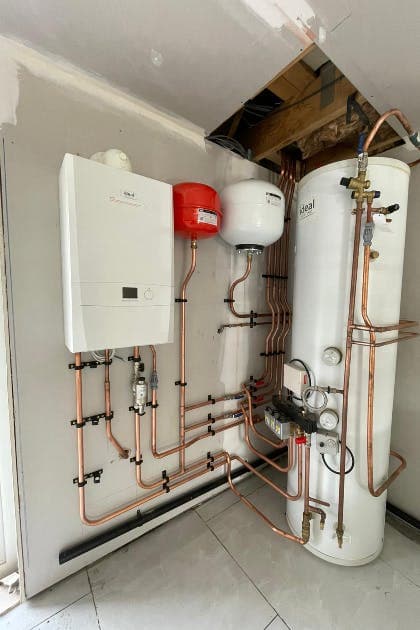
System and regular boilers work with a separate hot water cylinder and often a loft tank. With these setups, problems can involve motorised valves, cylinder thermostats or the pump as well as the boiler itself.
If your cylinder is heating up but the radiators remain cold, a valve that directs heat between hot water and heating may be stuck or faulty. If neither heating nor hot water is working, the fault may be at the boiler or pump level.
Common fault patterns and next steps
Below are some common heating problems homeowners experience. This guide isn’t a full diagnostic tool but can help you describe the issue clearly when speaking to an engineer.
Boiler display is off with no lights Possible Cause: Power cut, blown fuse, or tripped circuit breaker What to Do Next: Check your switches and fuse box; if power doesn’t come back on, call an engineer Pressure gauge reads below 1.0 bar Possible Cause: Low pressure from a leak or system venting What to Do Next: Top up the system pressure if you know how and it’s safe; if it drops again, book an engineer Boiler keeps shutting down and shows a fault code Possible Cause: Faulty sensor, fan, or other parts What to Do Next: Write down the fault code and try resetting once; if it happens again, call an engineer The top of some radiators stays cold Possible Cause: Air trapped inside the radiator What to Do Next: Carefully bleed the radiators, then check and top up the pressure if needed Radiators feel warm but the rooms stay cold Possible Cause: Thermostat set too low, system out of balance, or sludge buildup What to Do Next: Turn up the thermostat; consider getting an engineer to balance or service your system
When to stop troubleshooting and call an engineer
If you have checked power, controls, pressure and obvious leaks, and the heating still will not come on, it is time to call a qualified heating engineer. Persistent fault codes, loud banging noises, burning smells or repeated boiler lockouts should not be ignored.
Do not attempt to open the boiler, bypass safety features or reset it over and over. Professional testing is needed to keep your system safe and reliable.
Information to have ready for GGS Heating
Preparing a few key details before you call saves time and helps your engineer get straight to the point. It can also reduce repeat visits, as they are more likely to bring suitable parts.
Boiler make and model from the front panel or manual.
Any fault codes or flashing lights currently showing.
System pressure reading on the gauge when the system is cold.
What is working (for example, hot water yes/no, some radiators warm, any noises).
Anything you have already tried such as bleeding radiators or resetting once.
Once you have this information, get in touch with GGS Heating for a professional diagnosis and repair. Call 07411054448 to book a convenient visit, and your engineer can use the details from your checklist to get your central heating running smoothly again as quickly as possible.
Other Articles