
Blog
Unvented cylinder service: what’s checked and why it matters
A professional annual check helps keep your unvented hot water cylinder safe, efficient and reliable.
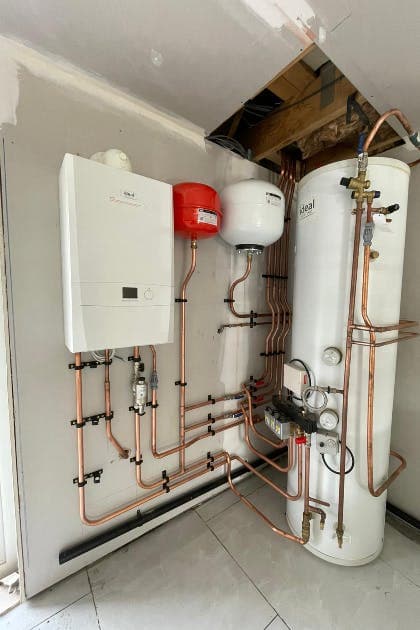
An unvented hot water cylinder can provide strong water pressure and plenty of stored hot water, but it also contains components that operate under pressure. An annual unvented cylinder service checks that these parts are working correctly and that your system remains safe, efficient and dependable.
What is an unvented hot water cylinder?
Unlike a traditional vented cylinder, an unvented cylinder is supplied directly from the mains water system and does not use a cold water storage tank in the loft. This arrangement can deliver good pressure to showers and taps, while freeing up space elsewhere in the property.
Because the cylinder stores heated water under pressure, it includes safety controls designed to prevent excessive pressure or temperature. These include temperature and pressure relief valves, an expansion vessel or internal air gap, and a tundish connected to discharge pipework.
What happens during an unvented cylinder service?
A qualified engineer will inspect the cylinder, controls and connected pipework rather than simply checking whether hot water is available. The exact procedure depends on the cylinder type and manufacturer’s instructions, but a typical service includes the following checks.
Testing the temperature and pressure relief valve and other safety valve operation
Checking the expansion vessel charge or internal air gap
Inspecting the tundish and discharge pipework for leaks, damage or incorrect installation
Testing the thermostat, immersion heater and heating controls
Looking for scale, corrosion, damaged insulation and signs of water leakage
Safety valves and pressure controls
Safety valves are designed to release water if pressure or temperature becomes too high. During a service, the engineer checks that the valves operate correctly and that they reset without continuing to discharge. A valve that sticks, leaks or has been altered can create a serious safety risk and should not be ignored.
Expansion vessel or internal air gap
When water heats up, it expands. The expansion vessel, or the air gap within certain cylinders, provides room for this increase in volume and helps control pressure. An engineer may check the vessel’s air charge, inspect its condition and re-pressurise it where appropriate, following the manufacturer’s instructions.
Tundish and discharge pipework
The tundish provides a visible way to identify water being discharged from a safety valve. It should be dry during normal operation, although a brief discharge during heating can occur on some systems. The engineer checks for dripping, correct visibility, secure connections and suitable discharge pipework leading to a safe termination point.
Signs your cylinder may need attention
You do not need to wait for the annual visit if you notice changes in the system. A dripping tundish can indicate a faulty safety valve, excessive pressure or an expansion issue, while fluctuating hot water pressure may point to a problem with the mains supply, pressure controls or cylinder components.
Banging, knocking or kettling noises can be linked to scale around the immersion heater or other heating components. Damp patches, rust marks, water around the cylinder, or hot water that runs out unusually quickly also warrant a professional inspection.
Scale, corrosion and electrical checks
Hard water can cause scale to build up on an immersion heater, reducing heat transfer and increasing energy use. Scale may also contribute to noisy operation. The engineer will look for visible deposits, corrosion around connections and deterioration of insulation, while checking that the thermostat is correctly positioned and operating within safe limits.
Immersion heaters and controls also need suitable electrical protection and secure connections. Any testing or repair should be carried out by a suitably competent professional, particularly where water and electricity are located close together.
Records and homeowner responsibilities
After servicing, you should receive a record of the checks completed, any readings taken and recommendations for repairs or follow-up work. Keep this information with the cylinder’s installation and manufacturer documents, as it can be useful for future maintenance, warranty queries or a property sale.
Homeowners should keep the area around the cylinder accessible, avoid storing items against valves or discharge pipework, and report any dripping, unusual noises or leaks promptly. Do not test, cap or adjust safety components yourself. These parts protect against pressure and temperature hazards, and incorrect work can make the system unsafe.
Arrange a professional cylinder inspection
Regular servicing can identify developing faults before they lead to water damage, loss of hot water or an unsafe pressure condition. It also gives you a clear record of your system’s condition and helps maintain reliable performance.
For advice or to request an unvented cylinder inspection and maintenance visit, contact GGS Heating on 07411054448. You can also learn more about hot water systems and cylinder replacement, or use the contact page to arrange a visit.
Other Articles


